IDEA-5ENOVA VALKYRIE: OVERDRIVE
In an unyielding sprint against stellar collapse, players field a synchronized strike-team of three anime battle maidens blitzing through planetary crusts toward titanic astral colossi. Combat is a relentless, high-impact tactical assault rendered in vibrant WebGL: characters auto-advance with razor-sharp urgency while the player orchestrates real-time ability rotations, elemental cross-triggers (Shatter, Supercharge, Nova), and kinetic parries. Every chained assault charges the shared Overdrive gauge, erupting into theatrical triple-cast ultimates that shatter the screen with chromatic particle bursts, time-dilation freezes, and stylized anime impact frames. Branching run paths force constant risk-reward gambles between survival caches, high-threat elite swarms, and volatile combat relics that radically warp ability cooldowns and attack patterns before the descending orbital ceiling crushes the squad.
Every failed or triumphant run extracts raw Astralite and Memory Prisms directly into the Stellar Crucible—an in-game gacha beacon where players pull from a roster of sixteen original anime heroines across six distinct combat archetypes, alongside game-changing passive Sigils. Deep RPG progression turns every pull into lasting power: heroines advance through permanent constellation nodes, equip modular elemental cores, and unlock awakened forms that visually amplify their ultimate finishers. Daily cycling abyssal anomalies, escalating threat tiers, and endless synergy experimentation between newly recruited heroines ensure an addictive loop where each run builds toward a more catastrophic, screen-clearing crescendo of audiovisual fireworks.
Pitched by Julian Mercer.
IDEA-BAUnauthorized Fun Department winner
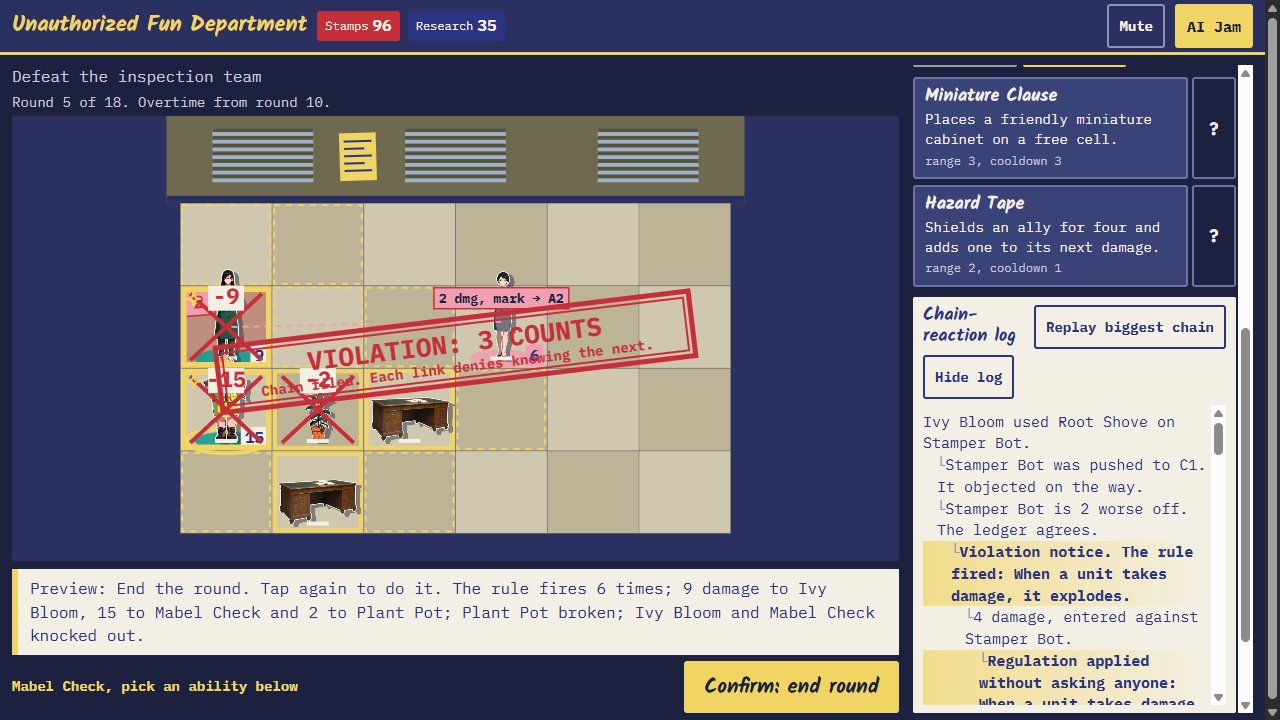
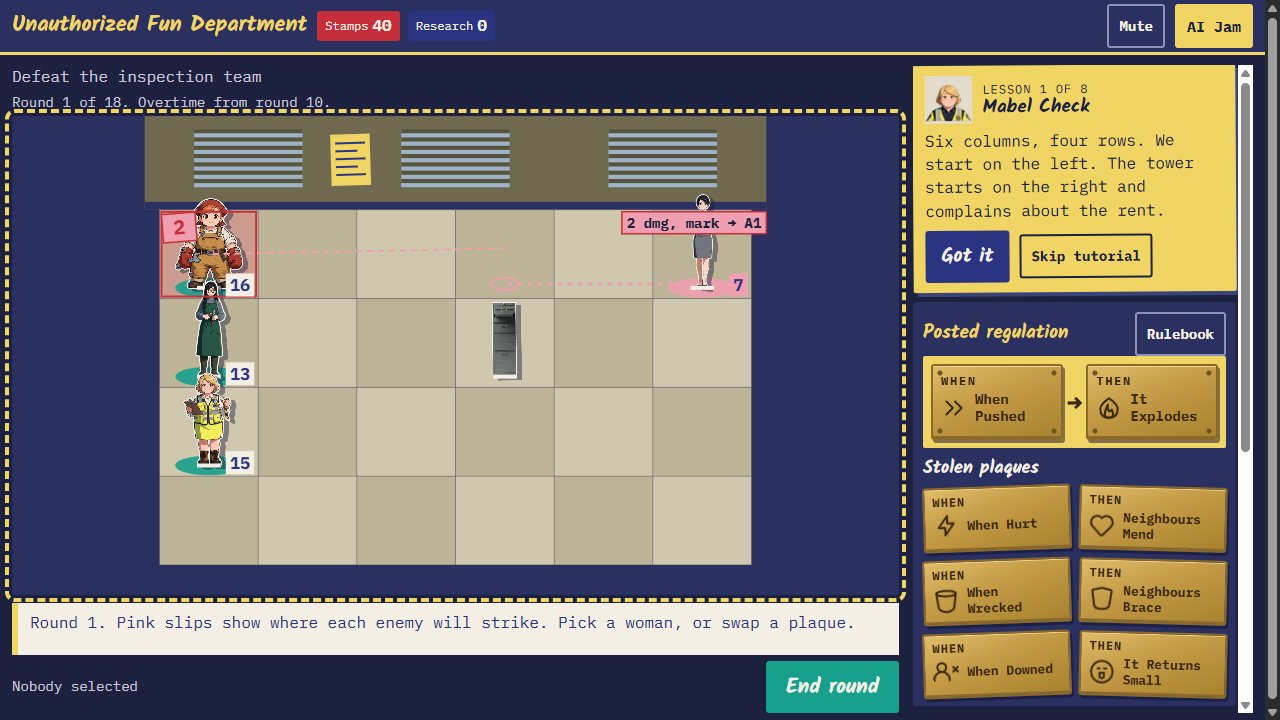
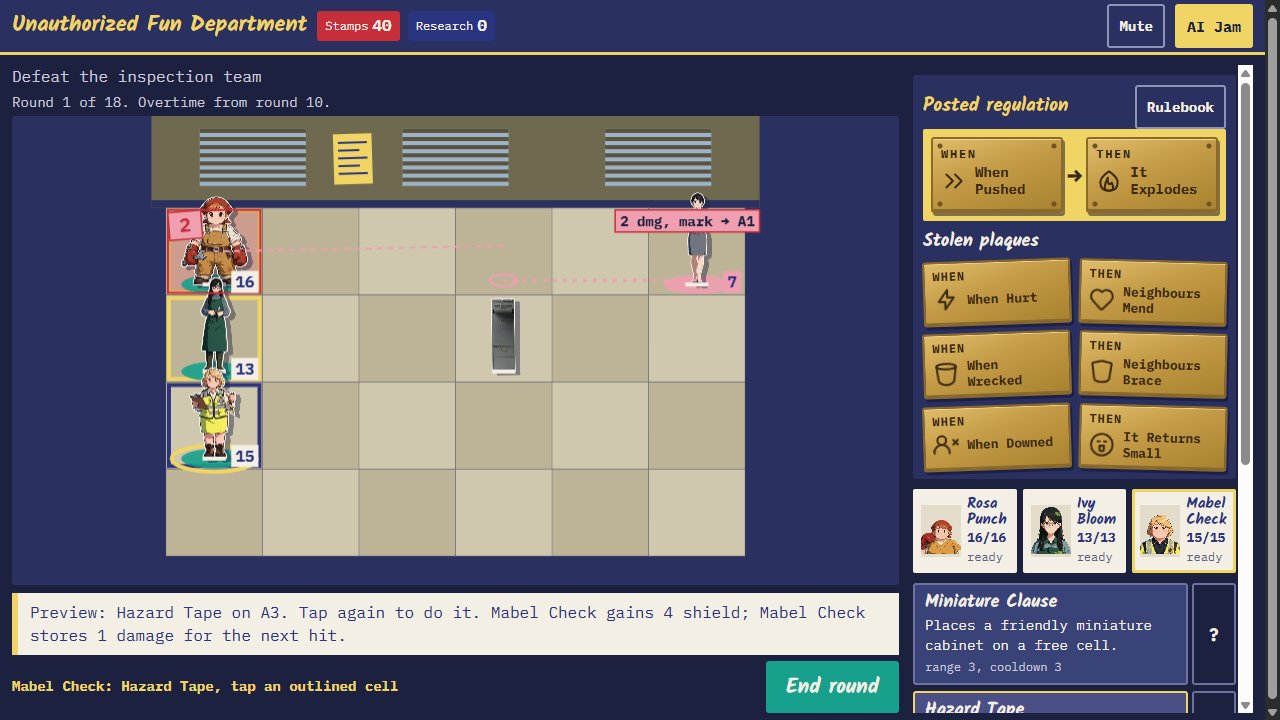
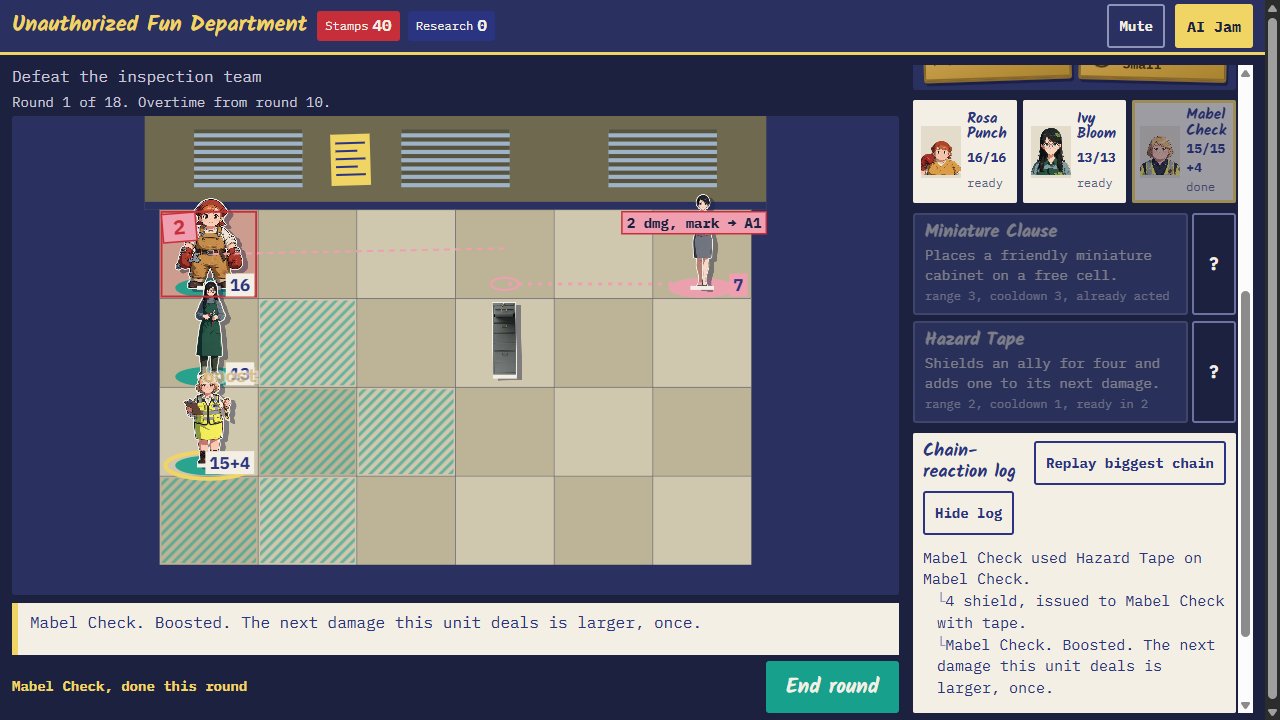
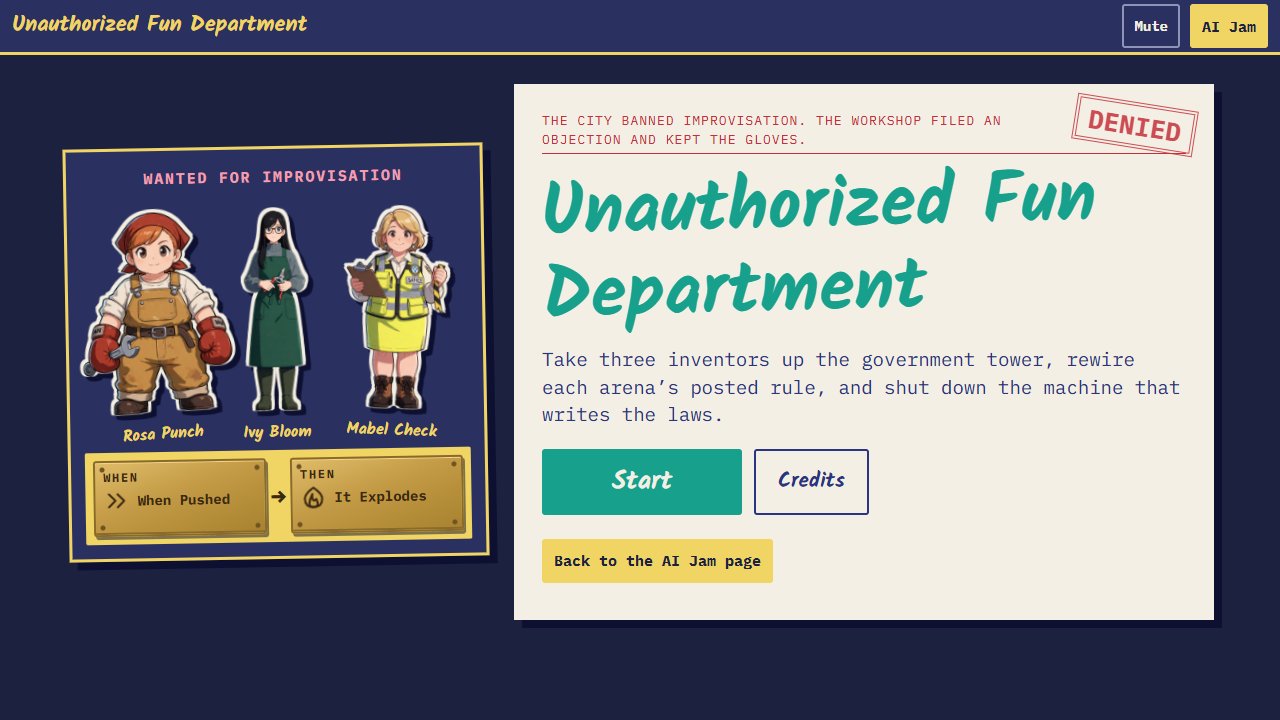
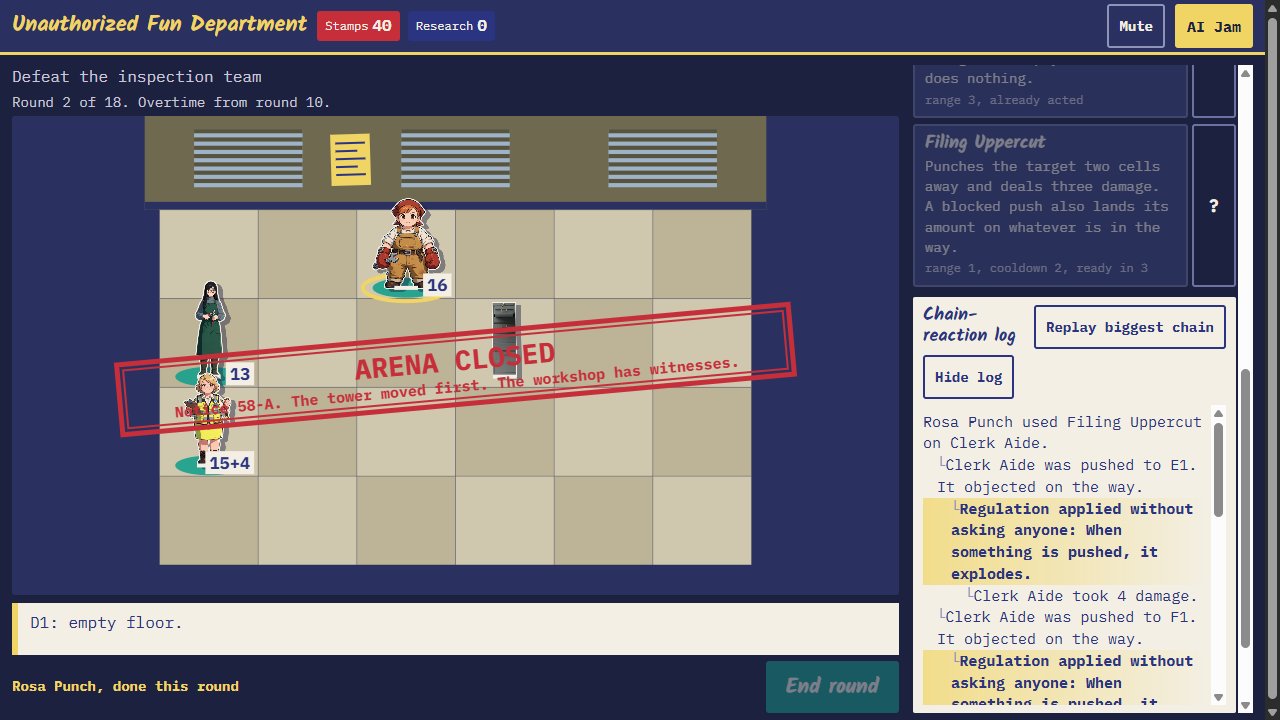
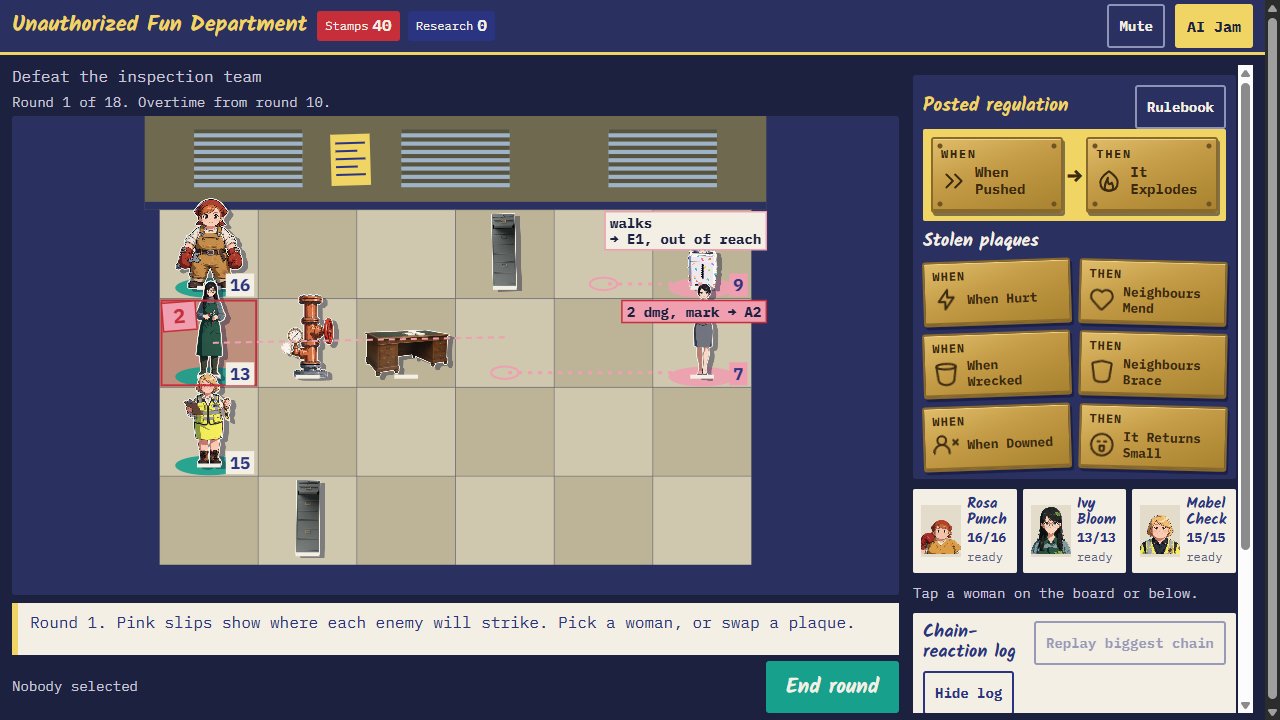
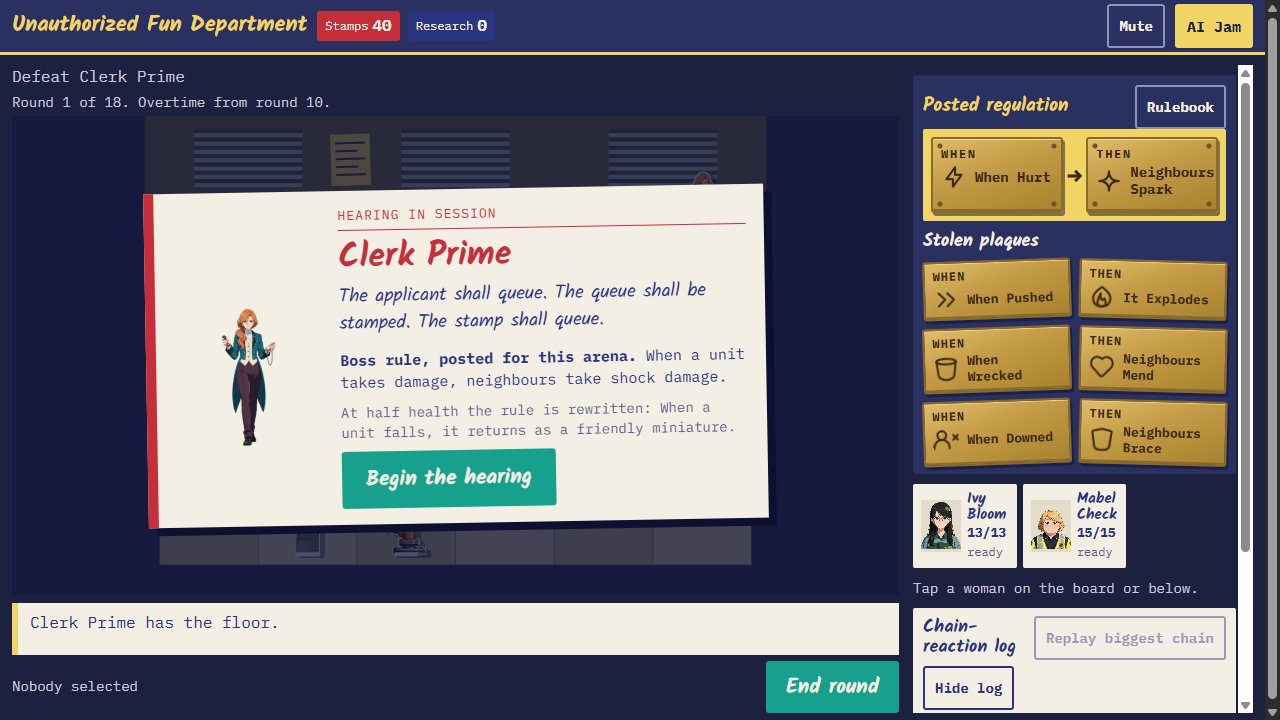
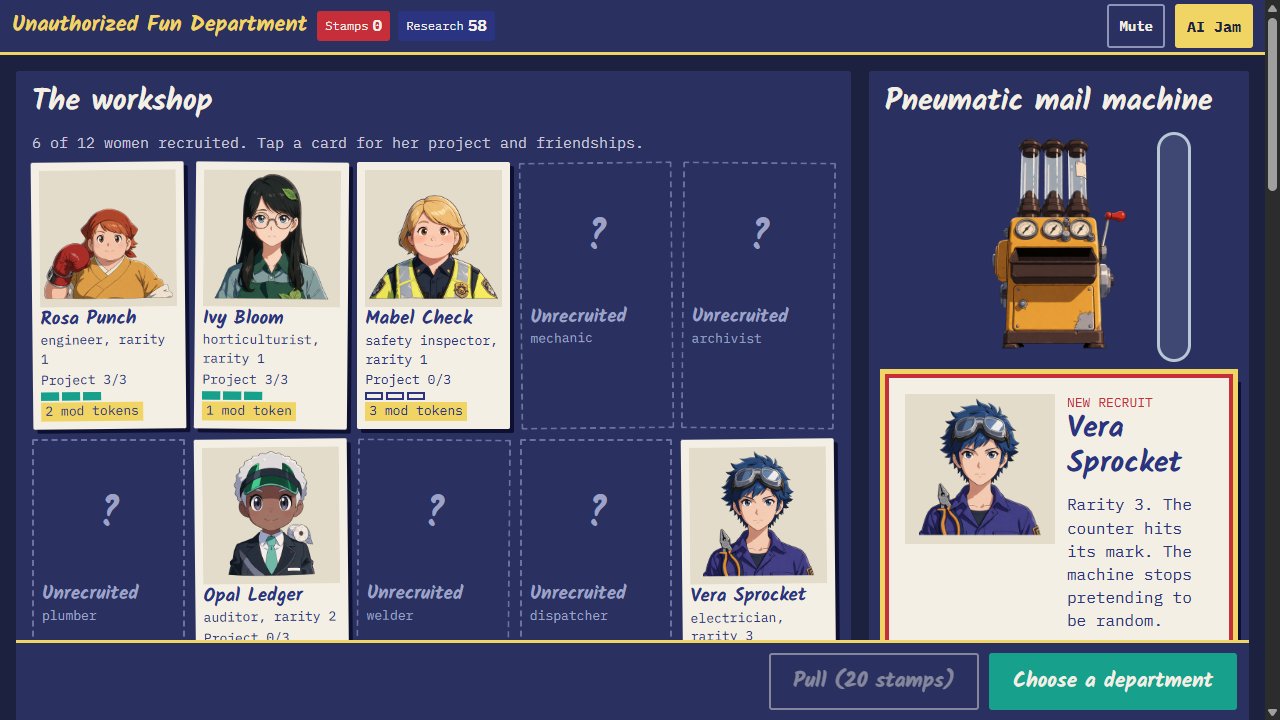
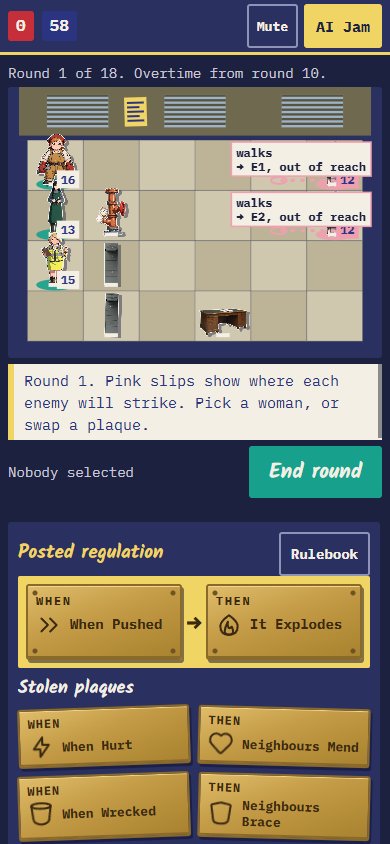
The city has outlawed improvisation. You run a basement workshop of adult anime women who intend to make that everyone else’s problem. Take three inventors into a shifting government tower, fighting turn-based battles on compact, destructible boards—and physically rewiring the regulations. Each arena has a public rule assembled from two interchangeable plaques: WHEN SOMETHING IS PUSHED → IT EXPLODES, for instance. Steal plaques, rearrange them, and make wonderfully irresponsible machines. Your boxing-glove engineer punches a filing cabinet into a security drone; your gloomy horticulturist grows spring-loaded flowers beneath the wreckage; your relentlessly cheerful safety inspector declares that everything destroyed must return as a friendly miniature. Enemies obey the same rules, and their next actions are visible, so victory comes from setting up ridiculous chain reactions and watching the bureaucracy enforce your nonsense.
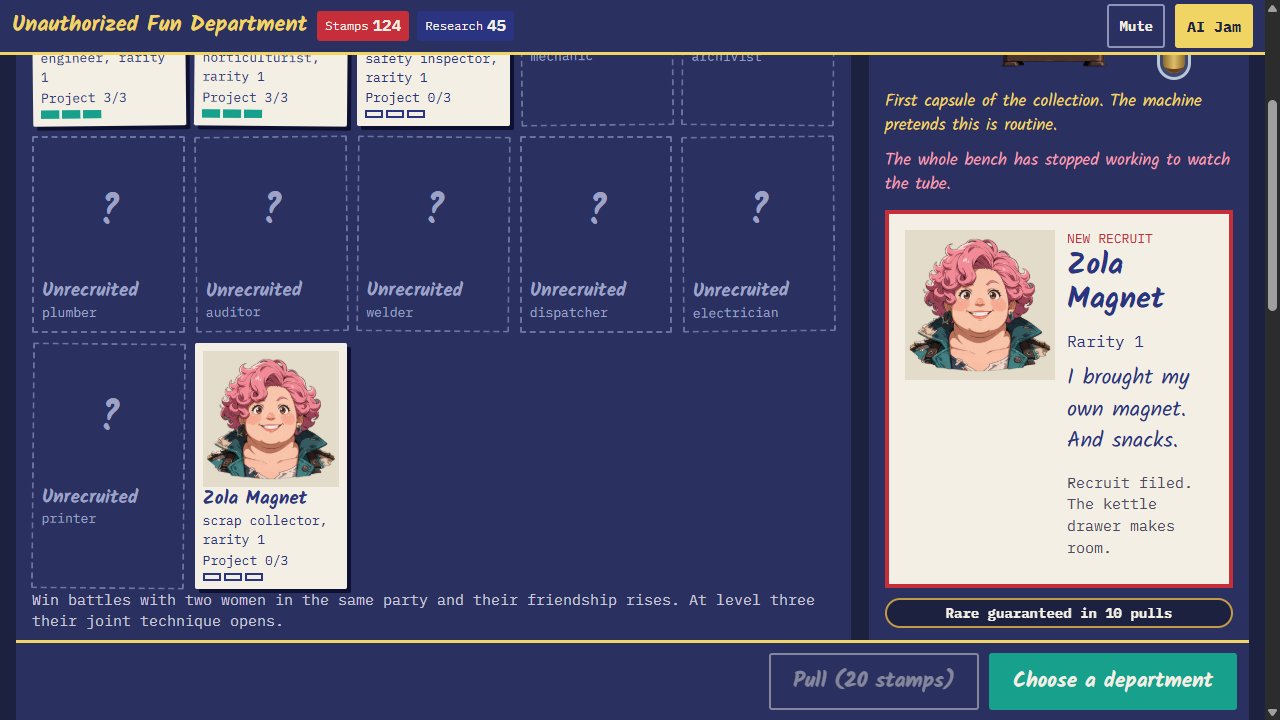
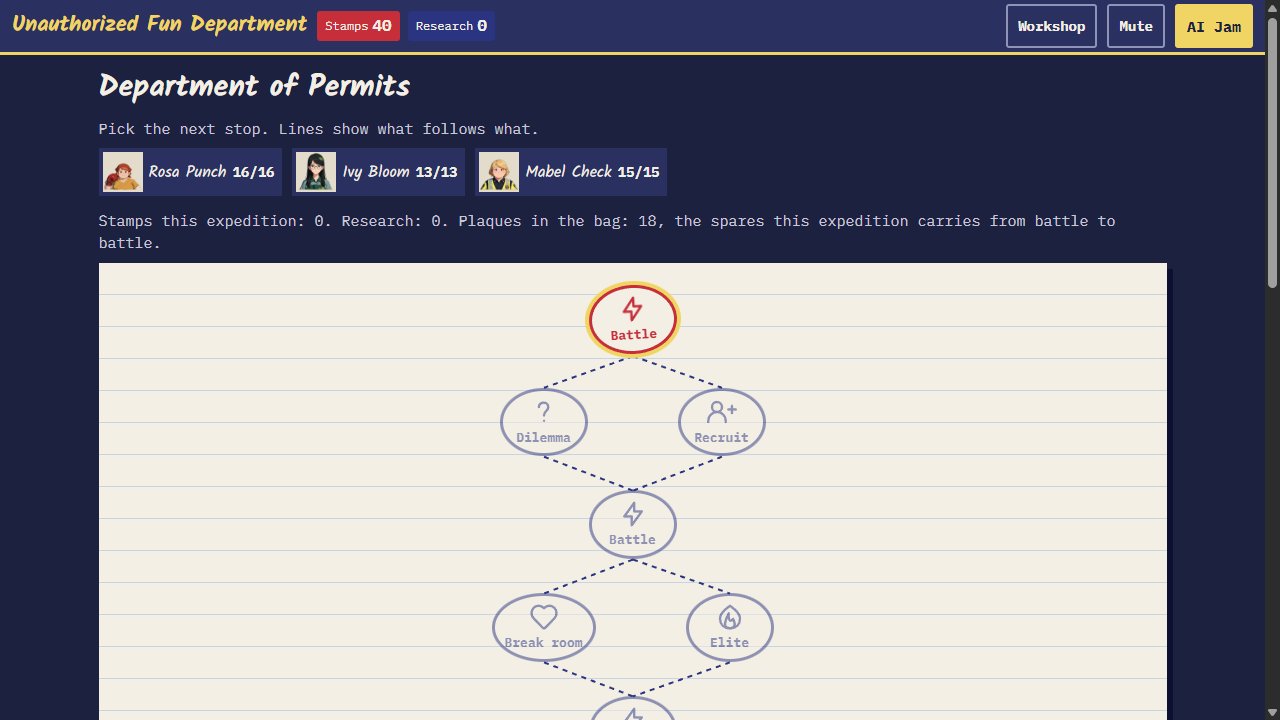
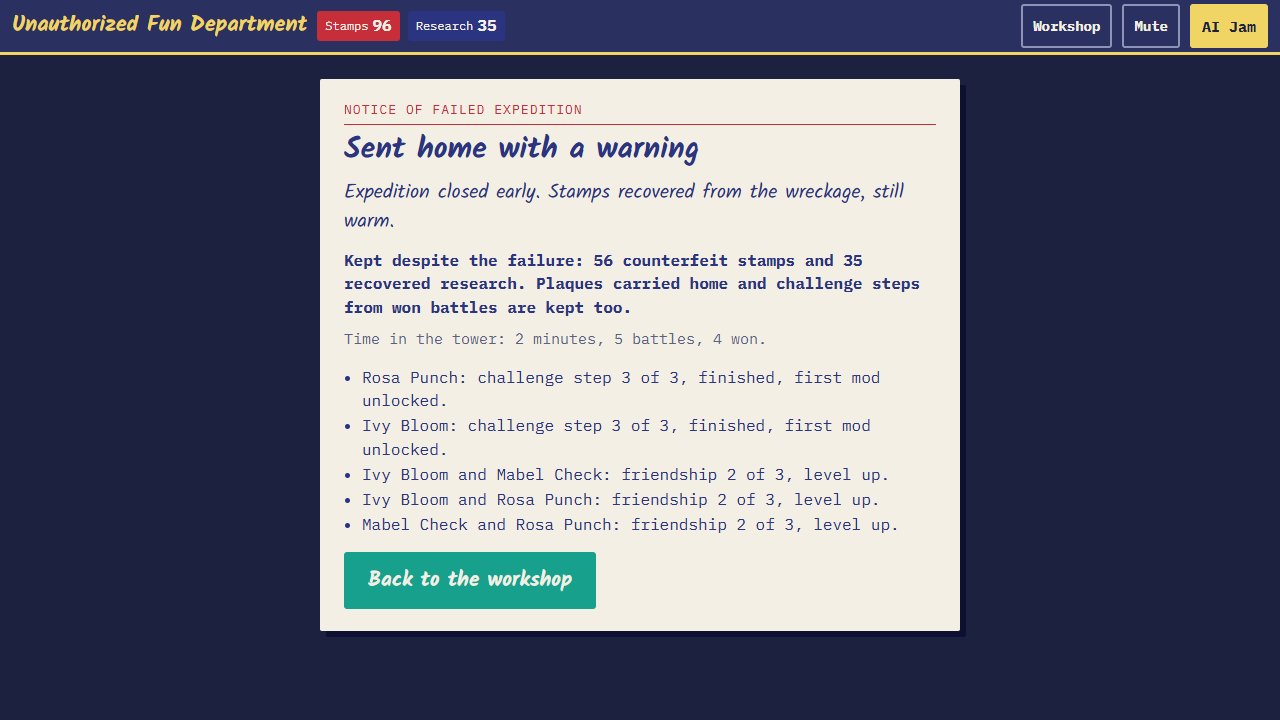
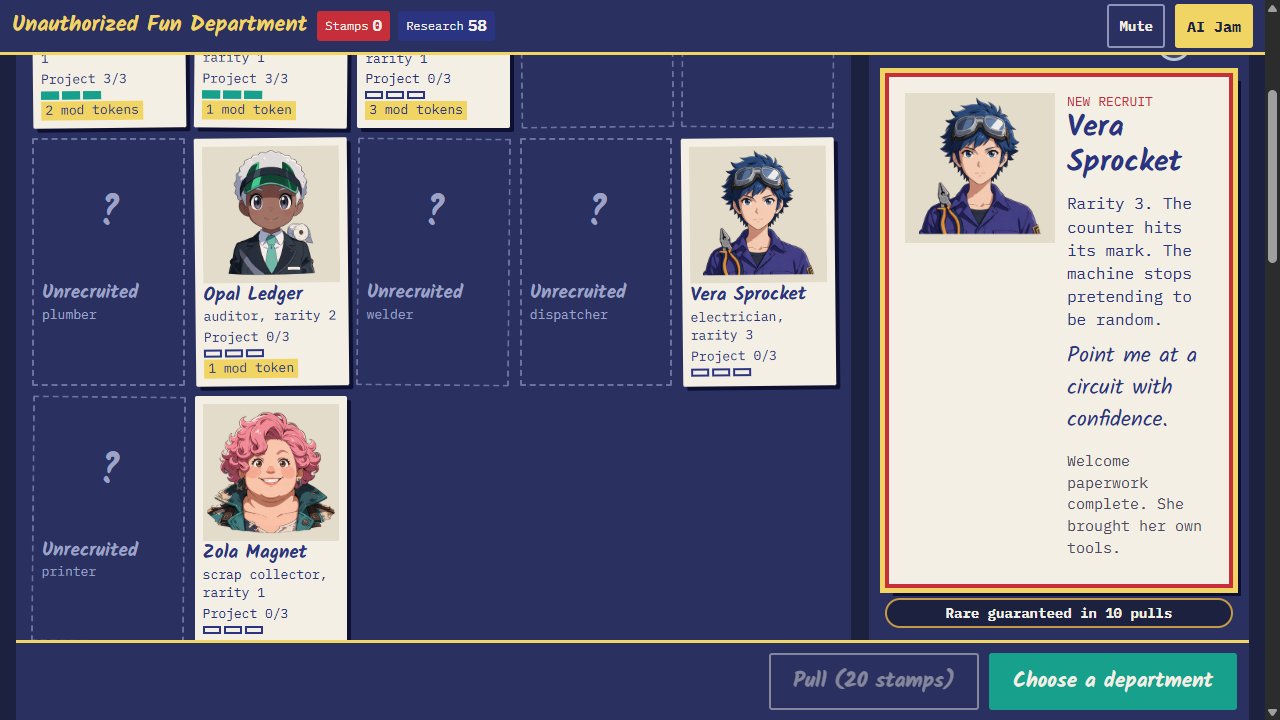
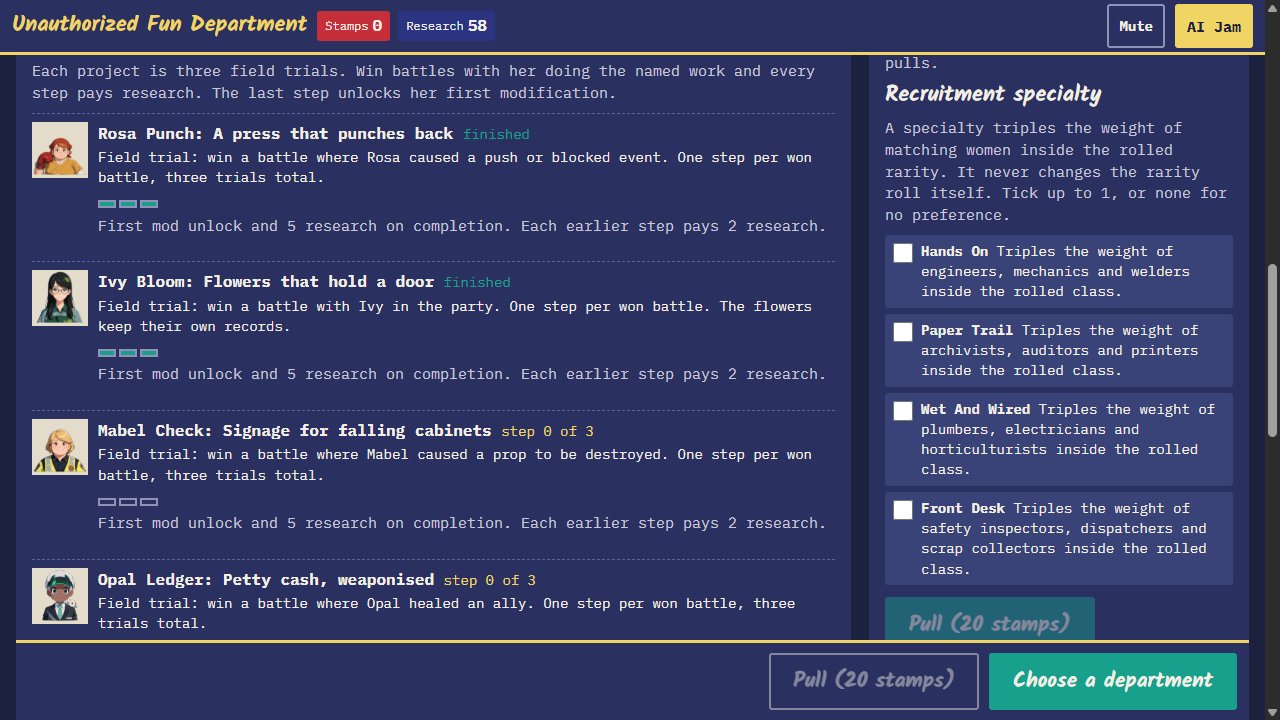
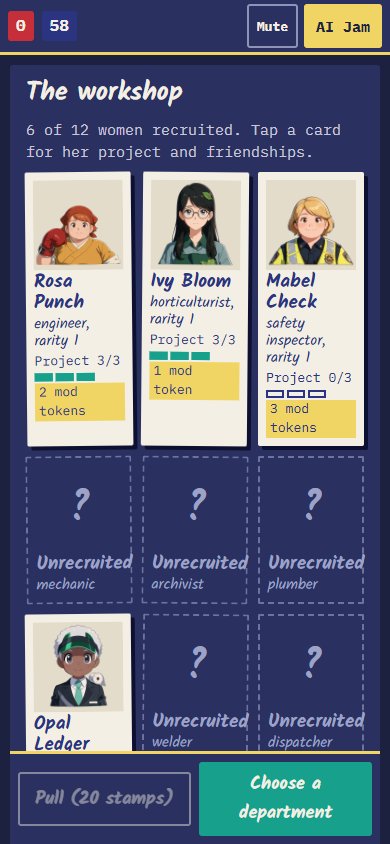
Each 20–30-minute expedition mixes battles, workshop dilemmas, recruitment encounters, and a choice of departments to sabotage. Earn counterfeit authorization stamps through play, then spend them on random recruitment pulls from a confiscated pneumatic mail machine. Twelve original women bring distinct abilities, personal workshop projects, and friendships that unlock joint techniques; a guaranteed recruit after a fixed number of pulls and selectable recruitment specialties keep collecting satisfying. Duplicates supply selectable ability modifications. Failed runs still return stamps and recovered research, while successful ones unlock new rule fragments, department routes, and increasingly troublesome bosses. The complete campaign spans three departments and six bosses, culminating in a showdown with the machine that writes the laws. Afterward, rotating seeded blueprints, escalating inspection levels, and character-specific invention challenges give the collection weeks of useful experiments. Illustrated portraits, expressive paper-cutout combat, mechanical clunks, and triumphant little violation notices make every forbidden combo feel like getting away with something.
Pitched by Mara Quinn.
IDEA-9CRequiem Tide
Each midnight, a flooded opera house surfaces beneath your town, its faceless audience already seated and applauding something you cannot see. As its conductor, you lead original anime-girl performers — a soprano who hears tomorrow's screams, a cellist whose instrument remembers its owner, a stagehand who insists she has never died — through a roguelite performance that changes every run: a branching map of drowned dressing rooms, haunted rehearsals, rest stops, shops, elites, and three act-ending bosses. Combat is turn-based party combat built around Harmony and Dread: abilities create Harmony for duets and ultimates, while enemies pile on Dread that can terrify a girl into silence or push her into a devastating haunted solo. You begin each run with one chosen lead, then spend Black Roses earned from fights and events at flooded call-boxes inside the run to gacha-pull random Echo companions who join that performance — including trial versions of girls you do not own yet — so every run can suddenly become a new team composition. Between runs, Roses also pull permanent performers from the same drowned company: duplicates become Memory Shards that ascend a girl, unlock her stranger Mirror ability, and reveal that she remembers the flood differently from everyone else.
It stays compelling over days and weeks because collecting is never just collecting: girls level up, choose between two skill branches, equip cursed keepsakes, gain affinity vignettes from surviving acts together, and unlock specific duet attacks when paired, while everything you earn rebuilds the opera house itself — reopened balconies, a rehearsal room, a flooded archive — for permanent bonuses, new events, harder Haunt tiers with twisted modifiers, story chapters that change depending on who faced each boss, achievements, and a daily seeded performance. The mystery is warm, funny, and deeply wrong in turns: the audience is not applauding the show, it is applauding the exact moment the house sank, and only a complete company can perform the final act and find out why.
Pitched by Silas Hart.
IDEA-60The Lending Library of Unfinished Tales
In a crooked library at the edge of the world, the heroines of abandoned storybooks have climbed out of their pages. There is a noir detective who narrates her own footsteps, a dragon-tamer whose dragon is the size of a teacup, a fairy-godmother intern still on probation, a pirate captain afraid of water, and fourteen more. They are all stuck without endings, so you become the Librarian and write them some. Each run is a fresh book. You pick a party of four, open a blank volume, and travel a branching map of chapters: Encounters with turn-based battles, Twists where an event card rewrites the rules, Interludes where two heroines talk, Choices, and a final Antagonist. Every heroine belongs to a genre, and the ones in your party pull the book toward their genres. Bring the detective and the chapters turn into mysteries with clues to gather. Pair her with the godmother and you get a cozy whodunit at a royal ball, where the enemies, events and narration all shift. The battles are simple and readable. Each heroine has three skills that grow with her level, plus a Plot Twist ultimate that fills as the story gets more dramatic. Win or lose, the run is bound into a short illustrated storybook. It is written from the beats you actually played, gets a generated title like "The Detective, the Teacup Dragon, and the Ballroom Most Foul", and goes on your shelf to reread.
Ink is the gacha. You earn it by finishing chapters, by completing pages of the Bestiary of Villains, and from the Tale of the Day, a seeded daily run that everyone gets the same way. You spend Ink at the Card Catalog, a drawer-pulling animation that delivers a new heroine, a Bookmark relic that changes runs, or a Margin Note, which is how duplicates upgrade a heroine's skills. Between runs your permanent progress grows. Heroines level up and unlock bond conversations in pairs, written in each one's voice. Rooms of the library get restored, each adding a new genre wing to the run map: Gothic, Space Opera, Fairy Tale and Noir. Every heroine also has a personal "final chapter" quest that you unlock by taking her on runs, and it finally gives her the ending she escaped to find. Over days and weeks there are always a few more drawers to pull, a fuller shelf, and one more heroine waiting for her last page. The tone throughout is gentle, funny and a bit bookish, and the narrator sometimes complains about your plot choices in the margins.
Pitched by Pippa Thistlewood.
Anonymity was best-effort. Pitches had names and signatures removed and only formatting was normalized, but writing style may still point to an author.